10 years on from start of work at Paradise Birmingham
By Ross Fittall
Imagine December 2015 – the city has been graced with typical British winter weather: frost, rain and chilly days followed by occasional sunshine. But, amongst the wintry chill, something momentous is happening on the site of the city’s former Central Library, School of Music and Paradise Circus Queensway, which is all making way for something else – something new.
A highly complex demolition programme starts to take down the concrete-faced buildings of the past while keeping the A38 Queensway tunnel functioning underneath the action. A giant cruncher machine makes light work of decades-old walls and crowds gather in the cold to witness the dinosaur-esque cruncher tear up the concrete slabs of the Central Library.
By making way for full redevelopment, Paradise will reinstate some of the streets and connectivity that once ran through this corner of the city. A key part of Birmingham, yet it had been dominated by roads, tunnels, overpasses, subways and dead ends – all the things that had previously tarnished the city’s reputation.
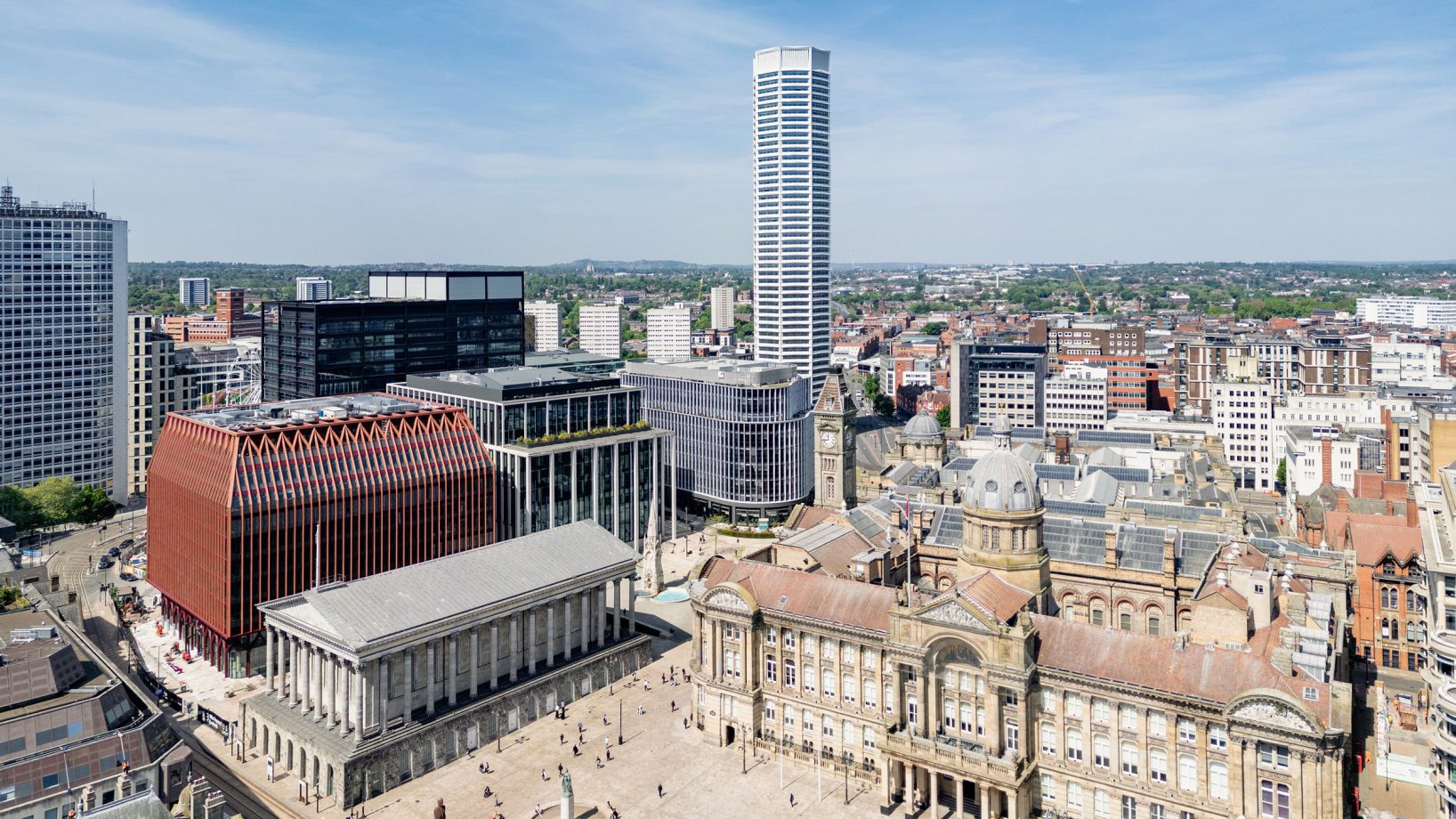
Plans were in place for a people-centred, mixed-use, 1.8 million sq ft development with three public squares, opened up new pedestrian routes, and up to ten new commercial buildings designed to meet current and future demand for cutting edge employment and leisure space.
Fast forward to today, ten years later, and Paradise has already delivered 840,000 sq ft of space and the development can look back over its first decade and be proud it has had such a positive impact on the city. Bringing new jobs, skills and opportunities to the city core, Paradise has also opened up even more potential for the future.
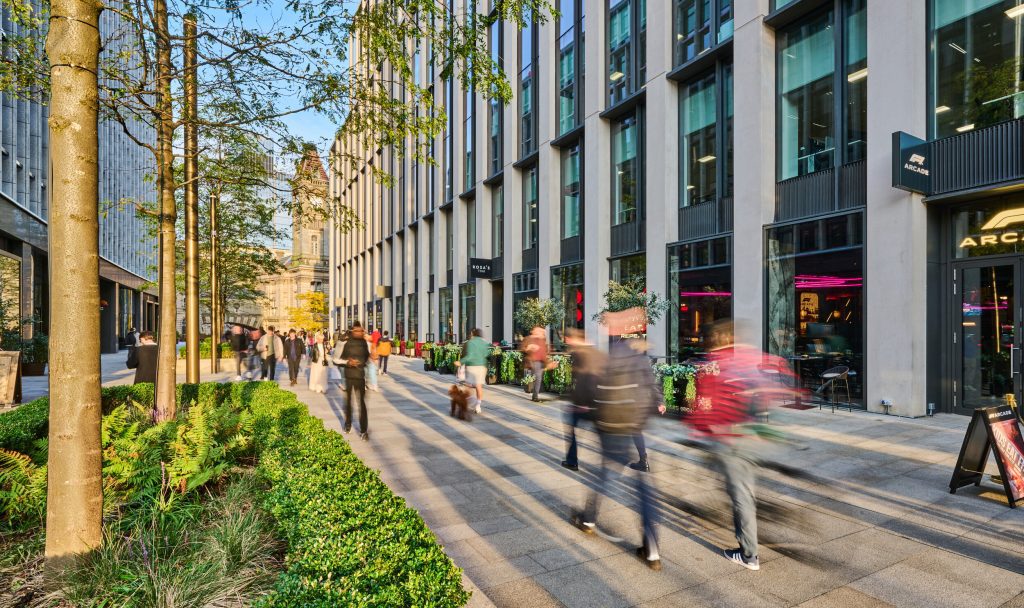
More than 50 employers are now based at the estate, ranging from the likes of major international Blue Chip companies like PwC, Goldman Sachs, DLA Piper, AtkinsRéalis, Mills & Reeve, JLL & Arup, to leading hospitality venues like Dishoom, Cow & Sow, La Bellezza, Rosa’s Thai, Albert’s Schloss and F1®Arcade.
Paradise has already become a vital part of Birmingham’s business ecosystem as well a new destination for the city with improved pedestrian links and public spaces fit for this important location alongside the city’s outstanding civic buildings.
But Paradise is also about more than its commercial offer, it is about its social impact too and has delivered £180 million of social and economic impact to the city, including £171 million spend in the local supply chain. As well as creating 4,920 new jobs, it has allowed young people to open their horizons to the different kinds of jobs and skills a place like Paradise can offer.
By working with Ahead Partnership over the past few years, and with a wide range of employers across the estate from all kinds of sectors involved, local youngsters from several of the city’s secondary schools have been exposed to the world of work.
The health impact of the development by removing heavy traffic and promoting active travel across pedestrianised streets, is also important. This future-looking approach underscores everything Paradise is about, and again illustrates how the development is improving a key part of the city – and in lots of different ways.
A recent report by TRUUD (Tackling Root Causes upstream of Unhealthy Urban Development) commissioned by a consortium of top tier UK universities, found Paradise was delivering £43 million in health benefits for its local area (approximately £20 million more than expected in the council’s Local Plan).
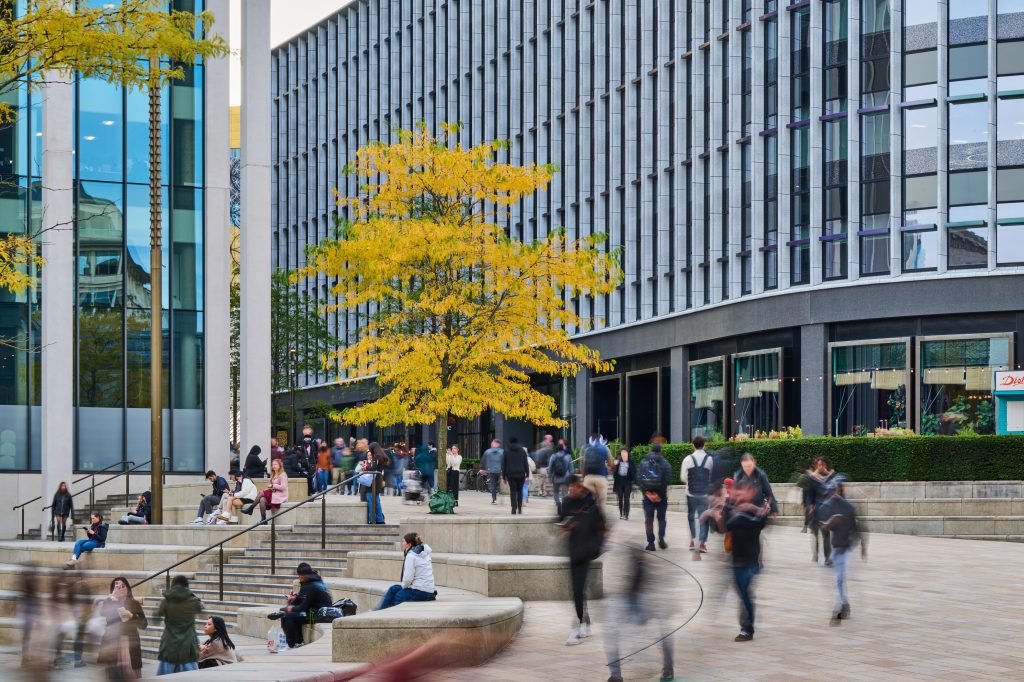
This is largely driven by a shift to more active forms of travel, improved opportunities for walking and feelings of security that has helped the site become a popular location for the public. The report also shows further improvements in the plans to increase green space, mitigate for noise and air pollution and the removal or downgrading of roads that provides the ideal scenario for future health benefits.
The TRUUD project demonstrates for the first time that monetised health evidence offers a means to measure the association between responsible real estate asset management and social value-added.
But however we measure the success of the first ten years of Paradise, we know we can declare with some confidence that the estate is living up to its promise and having a huge impact on the city and its people.